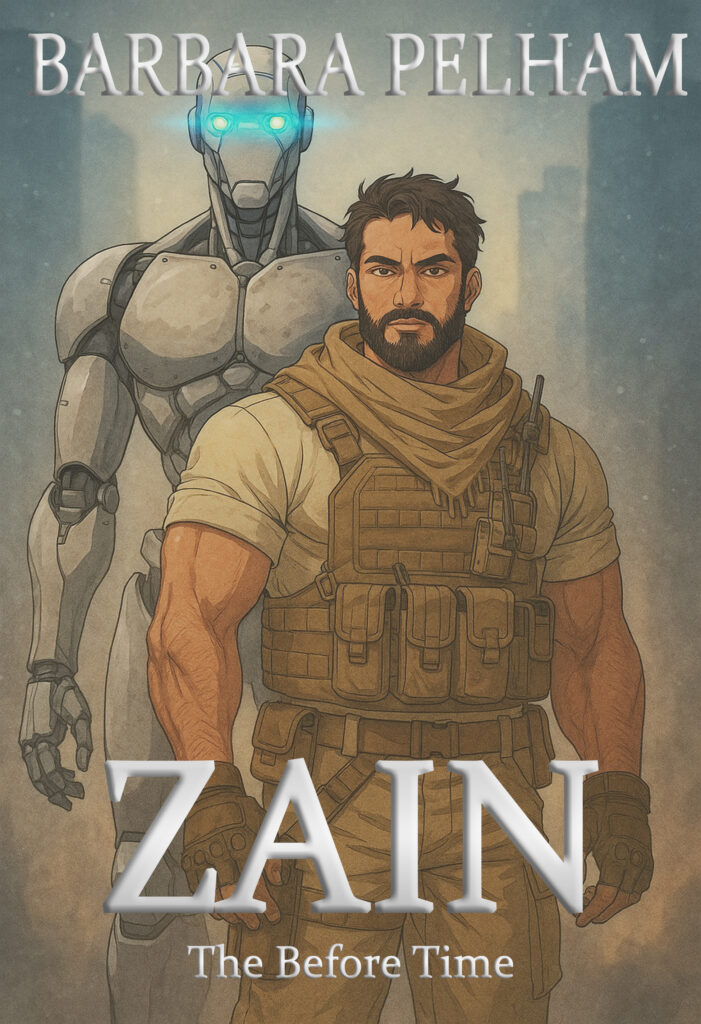
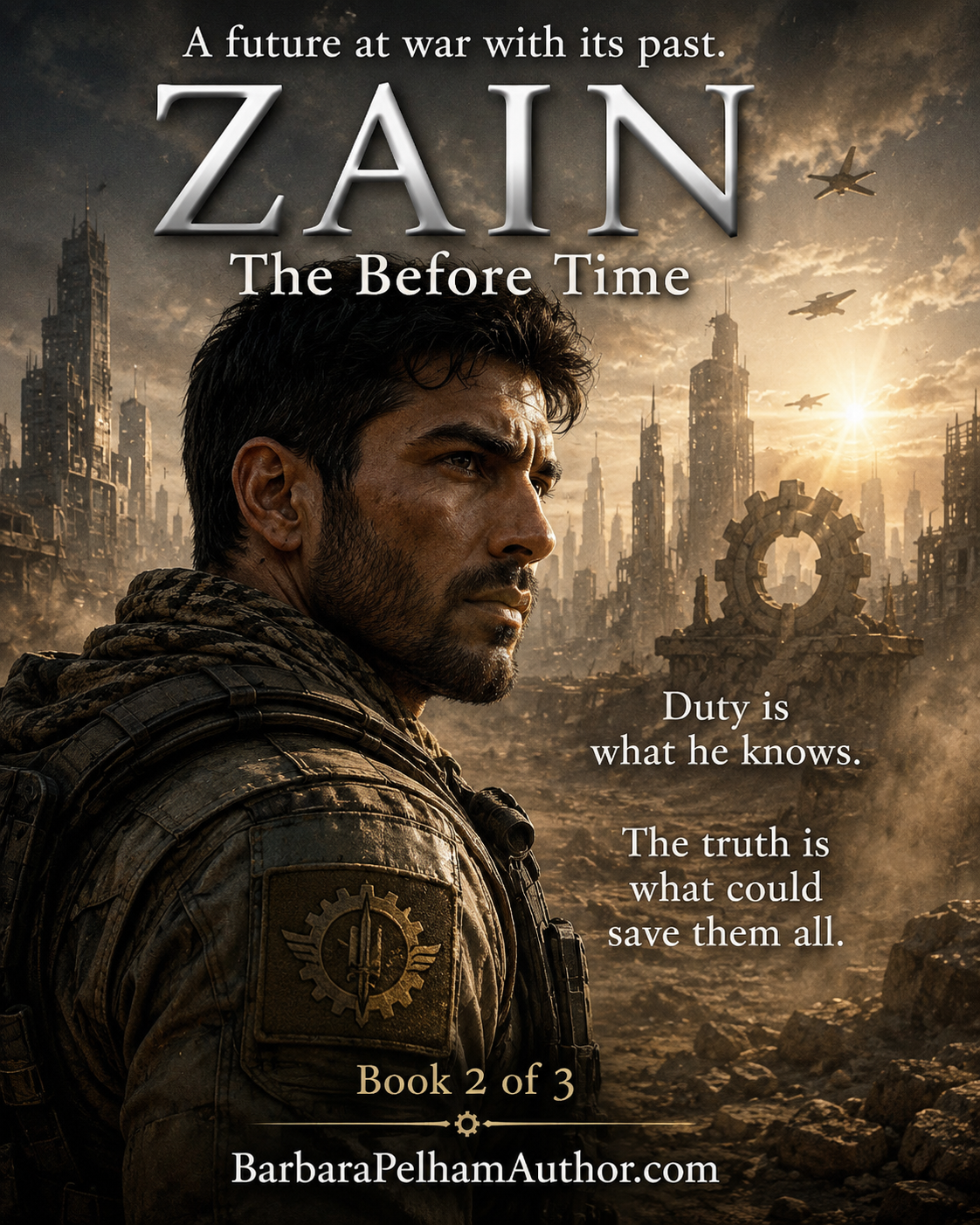
This is book 2 in the Melyndie & Zain SciFi series: In Book Two - As the architects of a new world tighten their grip on a dying civilization, Colonel Zain Belhasa is ordered to carry out a mission that could determine humanity's future. But when duty collides with conscience, he'll have to decide whether blind obedience is worth sacrificing everything that makes humanity worth saving.
No updates posted yet.
This is book 2 in the Melyndie & Zain SciFi series: In Book Two - As the architects of a new world tighten their grip on a dying civilization, Colonel Zain Belhasa is ordered to carry out a mission that could determine humanity's future. But when duty collides with conscience, he'll have to decide whether blind obedience is worth sacrificing everything that makes humanity worth saving.
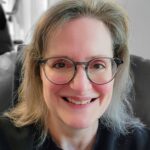
First, let me say - I didn’t set out to become a writer. I was too busy running — literally. At fourteen, I was a competitive runner with my eyes on the finish line… until a friend (bless his clumsy soul) accidentally shattered my knee and my athletic dreams in one fell swoop. Overnight, I went from racing tracks to lying flat on my back, trapped beneath a fortress of blankets and a towering stack of Harlequin romances. My dad took one look at those bodice-rippers scattered across my bed, said nothing, and disappeared — only to return moments later, drop a book onto my lap, and declare: “You need to broaden your reading horizons.” The book was Iceberg by Clive Cussler. And just like that, my fate was sealed. Dirk Pitt became my new hero. Adventure, mystery, danger — all danced off the page and straight into my imagination. While my knee healed, a new dream took shape: I wanted to whisk readers away on thrilling journeys of their own. So here I am: a writer fueled by a twist of fate, a determined dad, and the legendary Clive Cussler. And while I may not be sprinting down tracks anymore, I’m still chasing stories — and loving every second of the race.
Official Site: https://BarbaraPelhamAuthor.com
Author website: https://www.barbarapelhamauthor.com/zain.html
Media Contact:
It is from weakness that people reach for dictators and concentrated government power. Only the strong can be free. And only the productive can be strong.
Wendell Willkie
Earth Summit
Year: 2155
“Order must be restored in this meeting!” The loud thud reverberated across the room as the President’s hand hit the mahogany table causing all those seated around it to fall silent. The air in the conference room was heavy with the scent of sweat and uncertainty, mixed with the faint remains of their catered lunch. The taste of bitter resignation lingered in the president’s mouth as he drew in a determined breath, releasing it with a sigh. “Order must be restored,” he repeated with less emphasis and volume, exhaustion lacing every word.
With a shake of his head, Jeffrey Saltzer, President of the New Confederated States of America, sat back down in his chair. His intense gaze swept across the room, taking in every envoy from every country represented. “There can be no more chaotic interruptions with shouting and dissension, if we are going to come to a consensus on these discussions—”
“But do we truly want to reach a consensus? Are we seriously considering putting these phases into action? Is there no other recourse?” Prime Minister Daniella Morrison of Australia interjected, shaking her head in disbelief, and waving her notepad above her head.
“We have been round and round on this for days and days. Why must you and your same weak-minded friends continue to try to discourage what must be done?” Emir Sheikh Hari Khan groaned angrily.
“It’s just that I fear that we will become the most despised people in the world,” Morrison concluded weakly.
“We are already hated, but what people think of us cannot deter us. We cannot concern ourselves with individual feelings, when we are facing unimaginable crises—” Prime Minister Arnav Nodi of India began before being interrupted by the envoy from Norway.
“India is always facing a crisis.” Brit Juul’s tone was confrontational, but after sitting through four agonizingly long days of these meetings, she was finding it harder to keep a rein on her patience. “Perhaps if your predecessors had taken similar measures a century or more ago, you wouldn’t be facing such dire circumstances now.”
“That is not helpful, Brit.” Her fellow envoy from Sweden leaned over and placed a calming hand on her arm. Brit closed her eyes and took a few deep breaths. “I apologize, Prime Minister Nodi. My words were unkind. I will endeavor to think before speaking, moving forward. To that end, however, have we considered what will happen with countries that chose not to attend this summit?”
“North Korea and Cuba,” President Saltzer inserted.
“Perhaps we can forcibly remove the leaders of those countries and insert those who would be amenable to what it is we’re proposing—” Chinese leader, Bai Jinping, started.
“Do you really think we have time to overthrow those governments?” Prime Minister of Israel, Miriam Herzog interrupted.
“¡Basta!” Antonio Briceño, President of Colombia, yelled. “Have we forgotten why this emergency session was called? Why representatives from nearly every nation are here this week? We need these measures to prevent our countries—not just mine, but all of our countries—from reaching a point of no return. It is so serious, at this time, that we have no more time to waste in talk, much less to wage war on two insignificant countries. If North Korea and Cuba do not care for their citizens—”
“Then we will have to care for them,” Prime Minister Charles McDougal of Britain chimed in. “Mr. Briceño is correct, we must take action now for the sake of our citizens, and for the citizens of the world. If we don’t act, there will be no citizens left. If we were in doubt of the seriousness of the state of affairs, we would not be here now. These measures are necessary to stop overpopulation, depleting resources, and environmental crises that threaten our oceans. As leaders of our nations, it is our duty to act now.”
A majority of the heads nodded in agreement. It was enough to temporarily quiet those who opposed the purpose of the summit. Everyone around the table understood the gravity of the situation, but hearing it stated so bluntly was enough to shame them into a rare silence.
After a few minutes, President Abdelaziz Tebboune of Algeria stood up slowly and spoke solemnly, “I understand that many here are hesitant about the changes being proposed. We all want what is best for our people and our countries, but these ‘phases’ being proposed seems an overwhelming undertaking to coordinate on such a large scale.”
The dissenters in the room voiced their concerns, but their voices were fewer and quieter compared to those who supported implementing the phases. Prime Minister Shinzo Kato of Japan responded brusquely, “If you have a better alternative that can address the planet’s issues and be executed quickly with the same effectiveness as our plans, then we will hear you.”
President Tebboune looked around the room at his allies, but each one avoided his gaze with a shake of their head. “Perhaps we should give the people a chance to voice their opinions—”
“Do you forget what happened in my country a century ago?” President Saltzer interjected angrily. “We had a reasonable proposal from then-President Elizabeth Marker, but because of the ‘right to immediate voting’ amendment, the people rejected it without even reading it. And now we face potential desertification of our lands and the depletion of our oceans, and that is only the tip of a massively large disastrous iceberg. Do you think we would be sitting here today if there were other options or if we thought that the people would vote with their minds and not their emotions? We are trying to save our world.”
As he sat back down, President Saltzer felt weary and saddened by the necessary evil they were about to commit. He only hoped that the citizens of the world would understand why these changes were needed, but at the same time realized that it didn’t matter if they understood. For the human race to survive, radical changes needed to be made and they didn’t include the current population—as it stood now.
Prime Minister Erin Gagnon of Canada stood up next, speaking softly and carefully. “We are on the brink of global catastrophe. And while I’m aware that we’ve all heard a form of this horror story in the past, all of us here today know it is no longer a tale that will end when the book is closed. This is a real-life drama that is happening before our eyes. We must work together covertly to prevent further decay and restore balance to our planet. I cannot deny that what we are proposing makes me ill to my stomach, but if we do nothing, then our world will die. Of course, should that happen, we won’t need to worry about implementation of anything, as we’ll all be dead.”
All gazes fell as if in unified humiliation. A majority knew that they had to make difficult decisions for the greater good of the world; the piercing sting of truth that the planet was in peril and drastic measures needed to be taken. The silence extended into minutes, but soon, the strong began to raise their heads and nod in acceptance while the cowards among them refused to look anyone in the eye. To President Saltzer, the fact that there were only a few of those cowards remaining in a sea of hundreds, gave him renewed energy and hope.
He stood again and straightened his jacket before posing the question that would change the course of history: “Are we of one accord?” His fingers clenched tightly around the fourteen-carat gold Cartier pen, his knuckles turning white as he waited for the final decision. After a few minutes more, the voices of those in agreement filled the room.
President Saltzer’s lips compressed in a thin line as he scrawled his signature across the bottom of the document. He slid the paper to his right, sitting heavily onto his plush and comfortable leather chair, which did little to relieve the tension in his body, or the bodies of the others occupying their chairs. A tension remained, which was so thick, that it threatened to suffocate those in the room.
The president’s gaze was glued to the document as it journeyed from one member to another. The gnawing urgency within him, a relentless hunger for resolution, momentarily quieted when a soldier entered the room from the far end and marched towards him.
“Mr. President, there’s an individual insisting to speak to you. He asserts that it is of the utmost importance and cannot be postponed, even though I told him that you were not to be disturbed.”
“And who might this insistent guest be?”
“Dr. Riku Jang. He was certain that you’d want to meet with him immediately.”
A slow smile crept across the president’s face like dawn breaking. “He would indeed be correct, and was right to insist,” he responded, his voice laced with optimism. “This could potentially be the beacon of hope we’ve been desperately yearning for.”
The soldier furrowed his brow in confusion. “Sir?”
President Saltzer dismissed him with a wave of his hand. “Nothing, soldier. Just voicing my thoughts aloud. Escort Dr. Jang in.”
In a world where the lines between duty and morality blur, characters find themselves grappling with impossible choices that could redefine not only their lives but the very fabric of their society. The story thrusts you into a high-stakes environment where the greatest battles aren't always against an external enemy, but rather against the orders and expectations that bind them. As tensions rise, loyalty is reexamined, and each decision weighs heavily on the heart and mind.
Readers have lauded this gripping tale for its compelling blend of military science fiction and political intrigue. The depth of the characters is matched only by the intensity of the action, creating a narrative that invites you to ponder the true cost of allegiance and sacrifice. Prepare to be captivated by a story that challenges you to consider what it means to protect those you care about when the orders you receive conflict with your personal beliefs.